Showing posts with label First Week of School. Show all posts
Monday, September 3, 2012
Binder Project
In my last post I discussed the organizational system I will be using this year. Students are required to have a 3 ring binder dedicated solely to Algebra I. Their binders will have four dividers labeled reference, notes, quizzes, and journal. Because having their binders every day will be such an important part of the class, I decided to create a project that involved setting up their binder and creating a cover with "Numbers About Me". This Binder Project will count as a major test grade.
I gave out this project description on the 2nd day of School (August 28) and gave them until the Tuesday after Labor Day to complete the binder set up. Every day for the first week we discussed the binder and the importance of getting it set up as soon as possible.
The reference section will contain a student progress sheet, a syllabus, bell schedule, monthly calendar, State formula chart, a plastic sheet protector containing a coordinate grid that we will use as a white board and anything else I can think of to put it in there.
The notes section will contain the notes for the current unit only.
The quiz section will contain all graded and corrected quizzes
The journal section will contain a table of contents, warm-ups, journal entries from given prompts, activities we do like card sorts, matching activities, frayer models, foldables, and anything else that will summarize our learning for each unit.
If you are interested in my project description and grading rubric you can download it here
My plan is for students to grade each other's binders. I know, I know, this may or may not go well, but I will find out tomorrow (the day after Labor Day). This is the rubric I intend to hand out to the student's to help them grade their classmate's binder. I plan to walk around the room and monitor this process.
Monday, August 27, 2012
First Day Reflections 2012
Sorry for the boring nature of this post, but I am primarily writing to myself so I can remember next year, what I did on day one. What went wrong, what went right, what I'd change, and what I would leave the same.
To be honest, today was just so-so for me. As I am recovering from foot surgery, I am not 100% either physically or mentally. My doctor wasn't crazy about me going back to work after only two weeks, but I promised to be good and keep my feet elevated as much as possible.
Here was my initial plan. Notice how I planned down to the minute. What a joke! You know what they say about the best laid plans of mice and men.
Not sure what I was thinking when I planned the five minutes. I love to talk and easily got distracted in each class talking to them about myself and why I became a teacher. Most of the classes wanted to know all about my foot and even asked to see pictures of the scars (which I didn't show!) Next year allow at least 10 minutes
In reality, this took about 10 minutes
Did not get to
To be honest, today was just so-so for me. As I am recovering from foot surgery, I am not 100% either physically or mentally. My doctor wasn't crazy about me going back to work after only two weeks, but I promised to be good and keep my feet elevated as much as possible.
Here was my initial plan. Notice how I planned down to the minute. What a joke! You know what they say about the best laid plans of mice and men.
1. Students Enter/Sit Where they want and begin
filling out the Birthday Card (5 min)
This activity went OK. I love the birthday cards. This is the 2nd year I have used them. I have a special bulletin board I put them on. At the beginning of every month, I make up some little birthday cards for the students and attach a package of skittles. The kids love to have their birthday recognized in front of the other students.
2. Teacher/Class Introduction (5 min)
3. Students place themselves in alphabetical
order by their first name, then I pass around the roster sheet for students to
fill in their names. I will then use
this to make my seating charts. (5 min)
Again, five minutes for this activity was a complete joke. Could not believe how difficult this was for my 9th graders, but the juniors did very well. BTW, this is my first time to order students by first name. This process was recommended to me by another teacher as a quick way to learn names. I could already tell a huge difference in the number of names I knew at the end of the first day. So overall, I will keep this activity, but allow 15 minutes for it next year.
4. Discuss Supplies (Binder must be ready by
Tuesday-Test Grade) (5 min)
5. Parent Homework (5 min)
This activity also took about 10 minutes
6. Syllabus (1st Page only) (10 min)
Did not get to
7. Activity:
What Math Number Am I?? (10 min)
Did not get to
8. Weighted Averages activity (10 min)
Did not get to
Sunday, August 19, 2012
Calculating Weighted Averages-First Day of School Activity
I don't know about you, but every year, my 9th graders have a hard time with the concept of weighted averages. Even though we go over the fact that their homework is weighted 15%, quizzes 25% and tests 60%, they still have trouble understanding why they can make a 100 on "everything" and still have a 64 average.
This year, I have decided to do a short activity on weighted averages on the first day of school. I plan to let them use their cell phones to calculate the averages and the acitivity is designed to be completed in groups with very little teacher assistance. I plan on spending no more than 15 minutes on this activity. If they don't finish it, the back will be their first homework assignment.
Here is the activity if you'd like to modify it for your needs.
Friday, August 17, 2012
First Week of School Ice Breakers
I have several Ice Breaker Activities that I use each year. I try to do a short activity each day for the first week of the school. I usually look for activities that are short (less than 15 minutes) and allow me to get an insight into student's personalities and interests. As a bonus, the first two make great wall decorations for my empty walls!
Here are my favorites:
1. Name Reflection
2. Bio Pyramid
3. Get to Know Your Teacher Quiz
4. What's Your Math Number?
5. M&M Game (I changed the questions on this game for high school students)
Thursday, August 16, 2012
What's Your Math Number-First Day of School Activity
Instead of spending this week organizing, decorating, and cleaning my classroom, I am sitting in a chair with my foot propped up and drifting in and out of a Percocet daze.
Thanks to my foot surgery I am consigned to stalking other people's blogs and marveling at their amazingly organized and beautifully decorated classrooms. I am chomping at the bit to get into my room and try out some of the neat ideas I've been seeing the last few weeks on "Made For Math Mondays" and Pinterest but I'm resigned to the fact that I will most likely be beginning the year in a bare and undecorated classroom.
The only good thing about being confined to "chair rest" is I have had plentry of time to plan for my first couple of weeks and work on curriculum issues from last year. What I'm really trying to work out is a deatailed plan for each day of my first week and for the successful implementation of my Interarctive Student Notebooks. While looking at the activities I did last year during the first week of school, I came across this one that was so successful I want to share it with my readers.
The purpose of the activity is two-fold. First I want the students to feel comfortable talking with the partner and group they have been assigned to for the first grading period. The second purpose is to teach the students how to move their desks into a partner arrangement or group arrangement (what I call a pod) very quickly. Done right, the students are able to go from single file rows to groups of four or (pods) in just a matter of seconds. See this post about how I arrange my room for flexible groupings.
The title of the activity is "What's Your Math Number?"I ask them the question, "What's your math number?" and then I explain what a #1, #2, and #3 using this power point. I ask them to think about what number they are and why but to not say anything out loud. After a few minutes of thinking, I then ask them to scoot their desk together with their partner, introduce themselves, and take turns sharing their math number and their reasons for picking this number. After the partners have a chance to visit, I have them group their desks into their pods and each partner introduces the other partner and tells the group their math number and why. I was really impressed by the discussion I heard and pleased with how the students followed directions. At the end of the activity I had all the ones raise their hands and then the twos and the threes and we joked around a little about each group. It really seemed to relieve some of the first day tension that many students feel on the first day of a new math class and gave me valuable insight into the personalities of the students in my classes. I concluded the activity and told them I may not be able to turn all the threes into ones by the end of the year, but I was hoping to turn the threes into twos by the end of the year. I did the activity at the beginning of the second semester and asked if their math number had changed and many said they had gone from threes to twos over the course of the first semester.
One touching thing happened during this activity. Last year I had two inclusion math models classes.
In each class I had about 12 students with various learning and physical disabilities. I expected these students to classify themselves as threes since their disabilities severely hamper their ability to learn math. Much to my surprise, many of them classified themselves as ones. Even though to my eyes, they had difficulties, in their eyes, they were proud to be in a "hard" math class and thought the reason they were in there was because they were good at math. These students were a joy to teach all year long and many of them wrote me sweet notes at the end of the year that I will treasure forever.
Thursday, August 2, 2012
Making the Most of Your First Grading Period
There is something about the first of every school year that has always frustrated me. It seems to me that the first two or three weeks that we spend reviewing topics from previous years is such a waste of time. Students either enter Algebra I with a good foundation on things like integer operations, distributive property, collecting like terms or they don't. Two or three weeks of reviewing these topics seems to do nothing for those who are lacking these skills and only seems to bore the rest of the students.
Last summer, I heard a fantastic speaker at CAMT (Conference for the Advancement of Mathematics Teaching) and she challenged us to begin our year differently. She talked about how many students will give their maximum effort in the first grading period of the year, yet we waste this prime learning time teaching old material. She urged us to make the most of this maximum effort that most students bring to a new school year by beginning the year with challenging material and fill in any gaps as we went.
When I came back to my campus and said I wanted to skip our "Algebra Foundations" unit also known as Chapter One in your textbook, most the teachers were very opposed to the idea. It took a little convincing, but we finally decided to begin the year with the topic of functions. We jumped right in to rich mathematics and never looked back.
Challenging the students with new material from the first week of school on seemed to help with the complacency that some students seem to experience when presented with material they have already mastered. I want them to get the idea early in the year that they will need to put forth effort in order to be successful.
So how did this new approach affect the struggling learners? Surprisingly, most of the students were able to fill in their gaps as we went. After an entire year of solving linear equations, inequalities, and systems etc, they became quite proficient in the areas they were weak in when they entered algebra I. I admit, they are probably still behind their peers when it comes to being prepared for the next level, but I don't think spending three weeks teaching them how to add and subtract signed numbers would have increased their knowledge base.
So, think about your first few weeks of school carefully. What can you do to challenge your students and make the most out of the first few weeks?
Last summer, I heard a fantastic speaker at CAMT (Conference for the Advancement of Mathematics Teaching) and she challenged us to begin our year differently. She talked about how many students will give their maximum effort in the first grading period of the year, yet we waste this prime learning time teaching old material. She urged us to make the most of this maximum effort that most students bring to a new school year by beginning the year with challenging material and fill in any gaps as we went.
When I came back to my campus and said I wanted to skip our "Algebra Foundations" unit also known as Chapter One in your textbook, most the teachers were very opposed to the idea. It took a little convincing, but we finally decided to begin the year with the topic of functions. We jumped right in to rich mathematics and never looked back.
Challenging the students with new material from the first week of school on seemed to help with the complacency that some students seem to experience when presented with material they have already mastered. I want them to get the idea early in the year that they will need to put forth effort in order to be successful.
So how did this new approach affect the struggling learners? Surprisingly, most of the students were able to fill in their gaps as we went. After an entire year of solving linear equations, inequalities, and systems etc, they became quite proficient in the areas they were weak in when they entered algebra I. I admit, they are probably still behind their peers when it comes to being prepared for the next level, but I don't think spending three weeks teaching them how to add and subtract signed numbers would have increased their knowledge base.
So, think about your first few weeks of school carefully. What can you do to challenge your students and make the most out of the first few weeks?
Friday, July 27, 2012
What to Put in your New Student Folders
I had a request from a reader to share the documents I place in my new student folders. Here you go!
Welcome Letter
Student Information Sheet
Supply list
Class Syllabus
Parent Homework
Class calendar (I give out a new one at the beginning of each month)
Copy of your school's bell schedule
Package of Skittles
Mechanical Pencil
Welcome Letter
Student Information Sheet
Supply list
Class Syllabus
Parent Homework
Class calendar (I give out a new one at the beginning of each month)
Copy of your school's bell schedule
Package of Skittles
Mechanical Pencil
Thursday, July 26, 2012
New Student Folders
I want to share an idea that made my life so much easier last school year. Living right outside a major urban city, we get a lot of turnover in our student body. Every school year I get a little flustered when new students unexpectedly show up at my classroom door. Do you stop everything and help them settle in, or do you just tell them to go sit down and hope you will have time at the end to visit with the student?

To help alleviate the disruptions and help the new student feel welcome, I've started making New Student folders. During the summer, I buy about 20 folders for each prep and set each one up with all the papers I give out on the first day or two of school. My folders contain a welcome letter, a student information sheet, a parent information sheet that they will get signed and returned, a supply list, a calendar of our first unit, and a class syllabus. And best of all, I put a little piece of candy in there to make them feel welcome.
My note says something like this:
"Welcome to our class. Whether you are new to Paradise High School or you are just had a schedule change, change can be stressful. This packet will explain everything you need to know about this class. Please complete the following steps:
1. Fill out the student information sheet (yellow)
2. Please take home the Parent information sheet and have your parent (or guardian) fill out and return tomorrow
And so on . . .
Friday, August 26, 2011
Classroom Arrangement
This summer I was privileged to hear one of my readers, Jen from Lil Mop Top speak at CAMT (Conference for the Advancement of Mathematics Teaching). She had so many great ideas, but one of the things I learned from her was how to arrange your desks so that students are in rows and facing forward, but are able to pair up or get into groups of four very quickly and then back to rows just as easily
I arranged my desks like she said. Here is a pic of my classroom (before I'd done any decorating)with my desks arranged in what I call pods. The students sit close to a partner, but are able to turn their desks quickly to group up with the pair of students directly behind them to form a group of four. I call this group of four a pod. There is a good bit of space between the pods.
We have been doing activities this week that are designed to help them get to know their partners and their pod mates. I have been having them get together with their partner and with their pod at various times during the lessons. I have them go back to rows when I lecture so they can focus on me and the lesson.
I love this new seating arrangement. It is really the best of both worlds. Rows for direct instructions, partners and groups for activities.
Wednesday, August 3, 2011
First Week of School Part One
Planning for a successful first week of school can be challenging even for experienced teachers. You can plan every last detail, activity, and lesson only to find your plan goes to hell in a handbag the minute it encounters 150 teenagers and a schizophrenic administration that decides to change bell schedules, call impromptu class meetings, or otherwise generally disrupt the learning process. The paperwork and record keeping that goes along with the first week can be overwhelming when you are busy trying to learn names, and organize your own classes. The best we can do is decide what our goals are for the first week of school, plan more activities than you'll really need, and then hope/pray for the best.
One of the most effective things that I did last year was send a document home on the first day called "Algebra I First Assignment". This document outlined my expectations for the class to parents and students. The front had a portion for the parents to fill out and the back has a portion for the students to fill out. The wording is rather strong as I lay out my expectations for the students, but at them same time I try to convey what I will do to help students to be successful in my class.
At the end of the year, many of my students come up to me and say that they were so scared of me the first day of school and thought I was going to be a really "mean" teacher (mean to them means strict). They said that they were surprised to find out how much they enjoyed my class and they wished they could have me again for Geometry.
I really think that setting up very high expectations for behaviour and work during the first week and then being consistent and brave enough to follow through with your policies, leads to an environment where learning can take place everyday. I am not saying my classes are perfect every single day, but they know I will deal with disruptions swiftly and fairly.
If your school allows it, having a policy for late work and sticking to it can really cut down on your stress levels at the end of the grading period. In the old days, I never accepted late work in math class. Nowadays, most schools would never allow this. Our district policy says we must take late work up to two days late, but most teachers will accept any work from that grading period up to the last day of the term. I strictly stand by the no more than two days late policy. It is hard for some students who are used to putting off all their work until the 11th hour, but after they fail that first term, they usually see that I mean business. While my colleagues are struggling under mountains of grading during the last week of the term, I am able to eat lunch, relax, and leave as soon as the school day ends without taking home extra work. I do not spend hours gathering up "missing" work for students who are failing. I simply tell them that it is too late for me to take their late work and the only thing they can do to bring up their grade is to retake any quiz or test they failed.
If you'd like a copy of the assignment I send home of the first day of school, I will upload it here. Please feel free to use it or change it to meet your needs.
Algebra I First Assignment
One of the most effective things that I did last year was send a document home on the first day called "Algebra I First Assignment". This document outlined my expectations for the class to parents and students. The front had a portion for the parents to fill out and the back has a portion for the students to fill out. The wording is rather strong as I lay out my expectations for the students, but at them same time I try to convey what I will do to help students to be successful in my class.
At the end of the year, many of my students come up to me and say that they were so scared of me the first day of school and thought I was going to be a really "mean" teacher (mean to them means strict). They said that they were surprised to find out how much they enjoyed my class and they wished they could have me again for Geometry.
I really think that setting up very high expectations for behaviour and work during the first week and then being consistent and brave enough to follow through with your policies, leads to an environment where learning can take place everyday. I am not saying my classes are perfect every single day, but they know I will deal with disruptions swiftly and fairly.
If your school allows it, having a policy for late work and sticking to it can really cut down on your stress levels at the end of the grading period. In the old days, I never accepted late work in math class. Nowadays, most schools would never allow this. Our district policy says we must take late work up to two days late, but most teachers will accept any work from that grading period up to the last day of the term. I strictly stand by the no more than two days late policy. It is hard for some students who are used to putting off all their work until the 11th hour, but after they fail that first term, they usually see that I mean business. While my colleagues are struggling under mountains of grading during the last week of the term, I am able to eat lunch, relax, and leave as soon as the school day ends without taking home extra work. I do not spend hours gathering up "missing" work for students who are failing. I simply tell them that it is too late for me to take their late work and the only thing they can do to bring up their grade is to retake any quiz or test they failed.
If you'd like a copy of the assignment I send home of the first day of school, I will upload it here. Please feel free to use it or change it to meet your needs.
Algebra I First Assignment
Sunday, August 29, 2010
Get to Know Your Teacher Quiz
I got this idea from KFous over at My Web 2.0 journey
Tell the students you are going to give them a pop quiz. After the initial groans tell them that it is a multiple choice test about you!
Make up 5-10 questions about yourself with some multiple choice answers. Here are a few to give you some ideas.
1. Why is the number 3 important to Mrs. H
A It is the numbers of years she’s been teaching
B It is the number of children she has
C It is the number of times she’s been to Disneyland
D It is the number of piercings she has
2. Why is the number 25 important to Mrs. H
A It is how old she is
B It is the number of years she has lived in New Braunfels
C It is the number of her students who got commended on last year’s TAKS test
D It is the number of years she’s been married
3. Why is the number 13 important to Mrs. H
A. It is her lucky number
B. It is the number of years she’s been teaching
C. It is the number of times she floated the river this summer
D. It is the number of times she has been to Fiesta Texas
4. Why is the number 0 important to Mrs. H
A It is the number of sisters she has
B It is the number of times she has been to Schlitterbahn
C It is the number of dogs she has
D It is the number times she has flown on an airplane
5. Why is the number 1 important to Mrs. H
A It is the number of children she has
B It is the number of years she has taught at Canyon High School
C It is the number of times she has been to Schlitterbahn
D It is the number of tattoos she has
There will be lots of laughter during the quiz and you can use it as a chance to let your students know a little more about you.
At the end ask the students to choose five numbers and tell why they are important to them. They can either be funny or serious. I plan on filing their answers in their folder that we made the first day of school
I am doing this activity tomorrow and want to use the website Poll Everywhere to have the students text me their answers. I just need to go in and play around with the website and figure out how it works!
Tell the students you are going to give them a pop quiz. After the initial groans tell them that it is a multiple choice test about you!
Make up 5-10 questions about yourself with some multiple choice answers. Here are a few to give you some ideas.
1. Why is the number 3 important to Mrs. H
A It is the numbers of years she’s been teaching
B It is the number of children she has
C It is the number of times she’s been to Disneyland
D It is the number of piercings she has
2. Why is the number 25 important to Mrs. H
A It is how old she is
B It is the number of years she has lived in New Braunfels
C It is the number of her students who got commended on last year’s TAKS test
D It is the number of years she’s been married
3. Why is the number 13 important to Mrs. H
A. It is her lucky number
B. It is the number of years she’s been teaching
C. It is the number of times she floated the river this summer
D. It is the number of times she has been to Fiesta Texas
4. Why is the number 0 important to Mrs. H
A It is the number of sisters she has
B It is the number of times she has been to Schlitterbahn
C It is the number of dogs she has
D It is the number times she has flown on an airplane
5. Why is the number 1 important to Mrs. H
A It is the number of children she has
B It is the number of years she has taught at Canyon High School
C It is the number of times she has been to Schlitterbahn
D It is the number of tattoos she has
There will be lots of laughter during the quiz and you can use it as a chance to let your students know a little more about you.
At the end ask the students to choose five numbers and tell why they are important to them. They can either be funny or serious. I plan on filing their answers in their folder that we made the first day of school
I am doing this activity tomorrow and want to use the website Poll Everywhere to have the students text me their answers. I just need to go in and play around with the website and figure out how it works!
Ice Breaker activity-Name Reflections
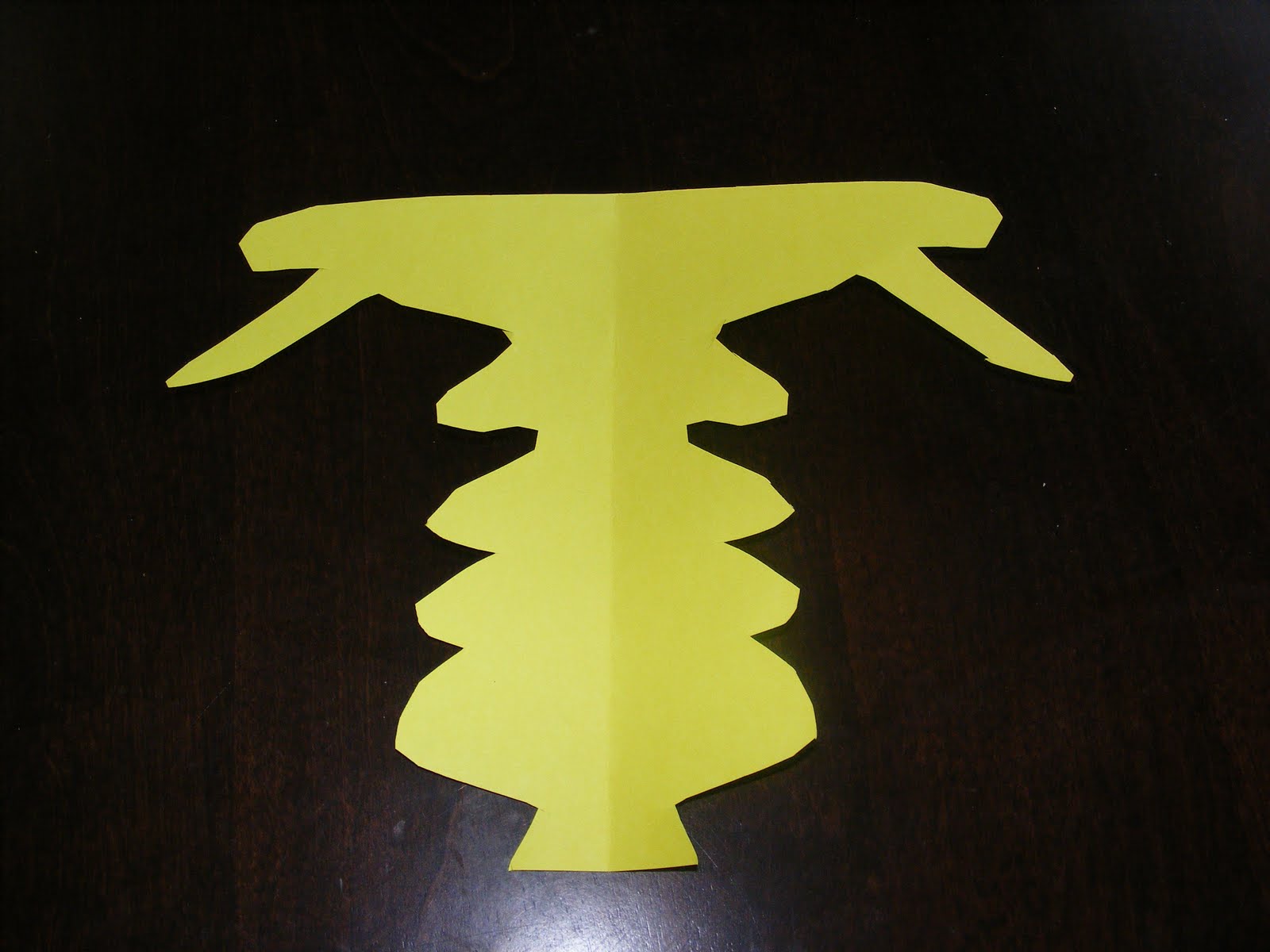
This activity called Name Reflection. The materials you will need are markers, colored paper, and scissors. I allowed 15 minutes for this activity on the third day of school.
Step One: Have students fold a piece of colored paper hamburger style

Step Two: Have students write their name IN CURSIVE along the bottom folded edge.(Warning: many students today do not know how to write in cursive. You will either have to do it for them or get them to help each other with this step)

Step Three: Cut along the curves of the cursive writing. Be careful not to cut the bottom folded edge.

Step 4: Unfold and decorate!

Step 5: Be Prepared to be amazed at the creativity of your students!

Step One: Have students fold a piece of colored paper hamburger style
Step Two: Have students write their name IN CURSIVE along the bottom folded edge.(Warning: many students today do not know how to write in cursive. You will either have to do it for them or get them to help each other with this step)
Step Three: Cut along the curves of the cursive writing. Be careful not to cut the bottom folded edge.
Step 4: Unfold and decorate!
Step 5: Be Prepared to be amazed at the creativity of your students!
Ice Breaker Activity-Bio Pyramid
This first activity works great for the first couple of days of school when you have lots of administrative tasks to attend to. It will take the students approximately 10-15 minutes to complete the entire activity.
Give students a copy of the Bio Pyramid. and have them fill in the information. I then had them cut them out and glue stick them to a pre-prepared place on my wall.
Note: Do not copy the bio-pyramid instructions two sided. Just give them the bio-pyramid. I put the instructions up on my smartboard.
Materials I used were scissors, markers, and glue sticks.
Here are the finished products. Added Bonus: Your room is well on its way to being ready for Meet the Parent Night!
Give students a copy of the Bio Pyramid. and have them fill in the information. I then had them cut them out and glue stick them to a pre-prepared place on my wall.
Note: Do not copy the bio-pyramid instructions two sided. Just give them the bio-pyramid. I put the instructions up on my smartboard.
Materials I used were scissors, markers, and glue sticks.
Here are the finished products. Added Bonus: Your room is well on its way to being ready for Meet the Parent Night!
Sunday, August 15, 2010
1st Day Parent Homework
A friend shared this idea with me a couple of years ago and I love it. She sends home a paper titled "1st Homework Assignment" and she asks parents to email her the answers to several questions about their child. This way, she already has their email in her address book and she doesn't have to enter it in manually.
I've been doing this for several years now and it works like a charm. One thing I have noticed is that parents don't really read the assignment and instead of emailing you the answers, they will send the completed form back with their child. I don't really mind, because at least they put their email address on the form and I have it for my records.
Anyway, I print all these emails out (or the completed form) and they go into my CYA folder that I talked about here.
Anyway, here is what my 1st HS assignment looks like.
First Homework Assignment
Algebra I
Parents and Guardians,
I am excited to have your child in my Algebra I class this year. Your child’s first assignment is really an assignment for you. Please send an email to me at *********** with the answers to the following questions. If you don’t have access to email, please just fill out this form and return it with your child.
1. My child’s name is ________________
2. My child is in _________ period.
3. My name is___________________________________
4. Relationship to student_____________________________________
5. Address________________________________________________
6. How would you like to be contacted between the hours of 7:30 and 5:00? ________________________________________________________
7. Email address_____________________________________________
8. Will you be using Parent Connect to check your child’s grades and attendance?
9. Does your student have any special needs in the classroom you would like me to be aware of? (seating preferences, health issues, difficulties in learning math, etc)
I've been doing this for several years now and it works like a charm. One thing I have noticed is that parents don't really read the assignment and instead of emailing you the answers, they will send the completed form back with their child. I don't really mind, because at least they put their email address on the form and I have it for my records.
Anyway, I print all these emails out (or the completed form) and they go into my CYA folder that I talked about here.
Anyway, here is what my 1st HS assignment looks like.
First Homework Assignment
Algebra I
Parents and Guardians,
I am excited to have your child in my Algebra I class this year. Your child’s first assignment is really an assignment for you. Please send an email to me at *********** with the answers to the following questions. If you don’t have access to email, please just fill out this form and return it with your child.
1. My child’s name is ________________
2. My child is in _________ period.
3. My name is___________________________________
4. Relationship to student_____________________________________
5. Address________________________________________________
6. How would you like to be contacted between the hours of 7:30 and 5:00? ________________________________________________________
7. Email address_____________________________________________
8. Will you be using Parent Connect to check your child’s grades and attendance?
9. Does your student have any special needs in the classroom you would like me to be aware of? (seating preferences, health issues, difficulties in learning math, etc)
Subscribe to:
Posts (Atom)